
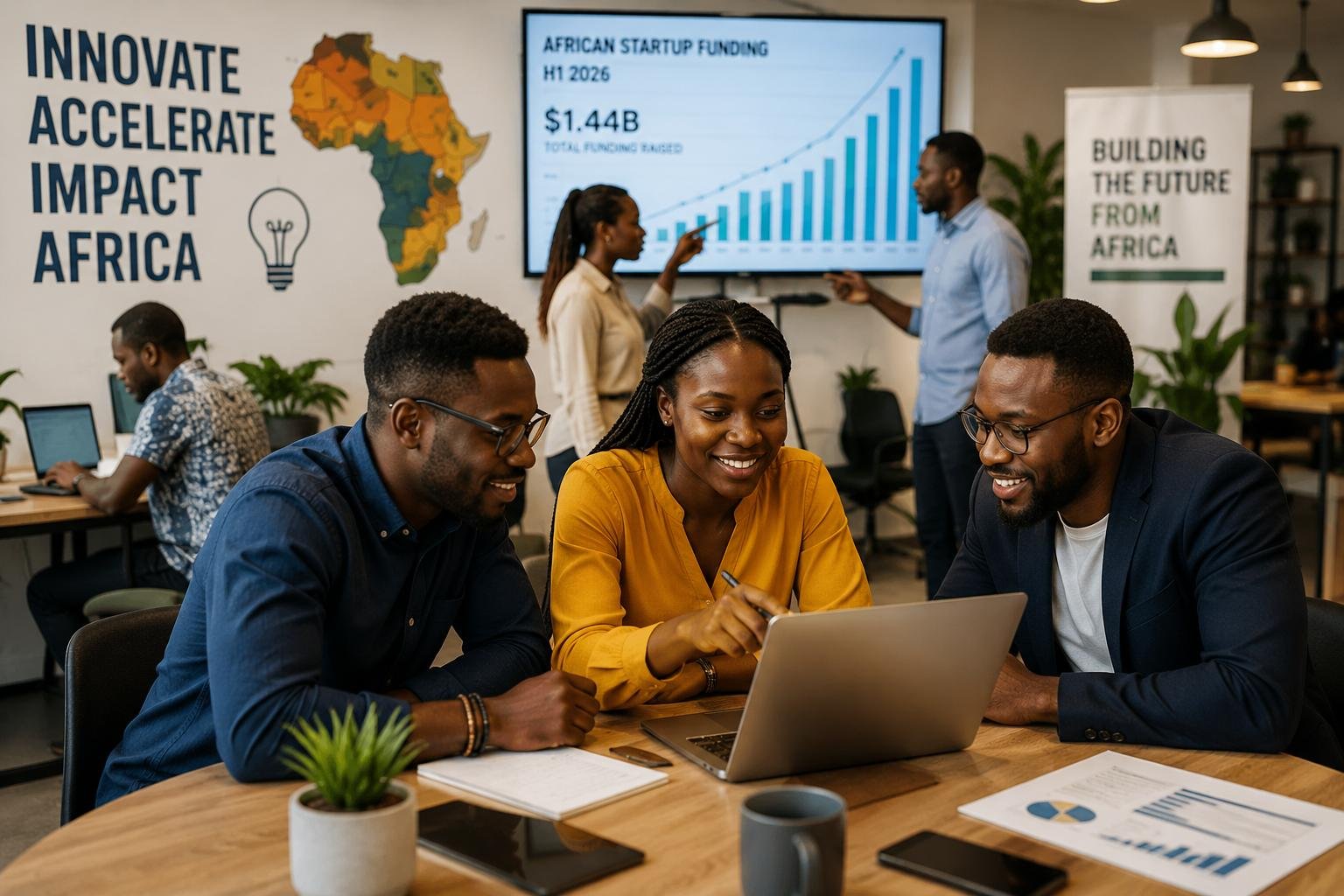
African Startup Funding Falls 6% Despite US$1.4 Billion Raised
African startups raised approximately US$1.4 billion during the first half of 2026, demonstrating the continent’s continued appeal to investors despite a slowdown in overall venture capital activity. However, new funding data shows that total investment declined by 6% compared with the same period last year, reflecting a more cautious investment environment and a reduction in the number of early stage companies securing funding.
The figures highlight a venture capital ecosystem that remains active but increasingly selective. While established startups continue to attract significant investment, younger companies are finding it more difficult to raise capital as investors place greater emphasis on profitability, sustainable growth, and clear business fundamentals.
The first half results suggest that Africa’s startup ecosystem is entering a new phase, one characterized by disciplined investment strategies rather than the rapid funding expansion witnessed in previous years.
Investors Become More Selective
The decline in overall funding does not necessarily signal weakening confidence in African innovation. Instead, it reflects changing priorities among venture capital firms.
Following several years of aggressive investment across global technology markets, many investors have shifted their focus toward businesses with stronger financial performance, proven revenue models, and clearer paths to profitability.
As a result, companies with demonstrated market traction continue to attract funding, while early stage startups, particularly those still validating their products or business models, face a more competitive fundraising environment.
This trend mirrors broader changes across the global venture capital industry, where investors have become increasingly cautious amid ongoing economic uncertainty and higher financing costs.
Early-Stage Startups Face Greater Challenges
One of the report’s most notable findings is the decline in funding available to early stage companies.
Seed stage and pre seed startups often depend heavily on venture capital to build products, hire talent, and expand operations. With investors becoming more selective, many founders are experiencing longer fundraising cycles and greater scrutiny during due diligence.
This shift is encouraging entrepreneurs to prioritize capital efficiency from the earliest stages of company development.
Many founders are now focusing on generating revenue sooner, improving unit economics, and demonstrating stronger customer demand before seeking institutional investment.
Accelerators, angel investors, government innovation programmes, and corporate venture initiatives may therefore play an increasingly important role in supporting startups before they become ready for larger venture capital rounds.
Strong Startups Continue to Attract Capital
Despite the decline in overall funding, the US$1.4 billion raised during the first six months of 2026 demonstrates that investor interest in Africa remains substantial.
Companies operating in sectors such as financial technology, artificial intelligence, climate technology, logistics, enterprise software, healthcare, and digital infrastructure continue to attract attention from both regional and international investors.
Several large funding rounds completed during the first half of the year contributed significantly to total investment, illustrating that capital remains available for businesses capable of demonstrating scalability, market demand, and strong leadership.
Rather than withdrawing from the continent, investors appear to be concentrating their resources on startups with stronger fundamentals and clearer long term growth prospects.
Regional Ecosystems Continue to Mature
Africa’s leading startup ecosystems, including Nigeria, Kenya, South Africa, Egypt, and emerging innovation hubs across Francophone Africa, continue to produce companies capable of attracting international investment.
Governments, universities, incubators, venture studios, and private-sector organizations have also continued investing in entrepreneurship, helping strengthen the broader innovation ecosystem.
While venture capital remains an important source of startup financing, founders are increasingly exploring alternative funding options such as revenue based financing, strategic partnerships, grants, development finance, and corporate investment.
This diversification may improve the resilience of Africa’s startup ecosystem by reducing dependence on traditional venture capital alone.
A Shift Toward Sustainable Growth
Industry observers increasingly view the current investment environment as a transition from rapid expansion to sustainable growth.
During previous investment cycles, many startups prioritized aggressive customer acquisition and market expansion.
Today’s investors, however, are placing greater emphasis on financial discipline, operational efficiency, customer retention, and long-term value creation.
This evolution could ultimately strengthen Africa’s startup ecosystem by encouraging businesses to build sustainable operations before pursuing rapid expansion.
Although fundraising has become more competitive, startups that successfully navigate the current environment may emerge stronger and better positioned for long term success.
Looking Ahead
The second half of 2026 will provide further insight into whether venture capital activity begins to recover or whether investors continue maintaining a cautious approach.
Continued progress in artificial intelligence, fintech, climate technology, enterprise software, digital infrastructure, and healthcare innovation is expected to create new investment opportunities across the continent.
At the same time, improving macroeconomic conditions and greater regulatory certainty could help restore investor confidence and encourage increased venture capital deployment.
For founders, the current market reinforces the importance of building resilient businesses capable of delivering measurable value, regardless of broader funding conditions.
EIA Takeaway
Africa’s startup ecosystem continues to demonstrate resilience despite a more challenging fundraising environment. Raising approximately US$1.4 billion in six months underscores that investor interest in the continent remains strong, even as capital becomes more selective. The 6% year on year decline reflects a broader shift toward disciplined investing rather than a loss of confidence in African entrepreneurship. For founders, the message is increasingly clear: sustainable growth, strong unit economics, and clear business fundamentals are becoming just as important as innovative ideas in securing venture capital.