
WeLight Announces US$650 Million Investment to Expand Solar Mini Grid Operations Across Africa
Clean energy company WeLight has announced plans to invest US$650 million to significantly expand its solar mini grid operations across Africa, marking one of the continent’s largest private sector commitments to decentralized renewable energy infrastructure.
Announced on July 6, 2026, the expansion will focus on Nigeria, the Democratic Republic of the Congo (DRC), Madagascar, Mali, and several other African countries. The company aims to increase its customer base by ten timeswhile delivering reliable electricity to approximately one million people by 2030.
The investment highlights growing confidence in Africa’s renewable energy sector, where solar mini grids are increasingly viewed as one of the fastest and most cost effective solutions to the continent’s electricity access challenge.
A Major Push for Rural Electrification
Access to reliable electricity remains one of Africa’s biggest development challenges.
According to international energy agencies, hundreds of millions of people across the continent still live without dependable power, particularly in rural and underserved communities where extending national electricity grids is often too expensive or technically difficult.
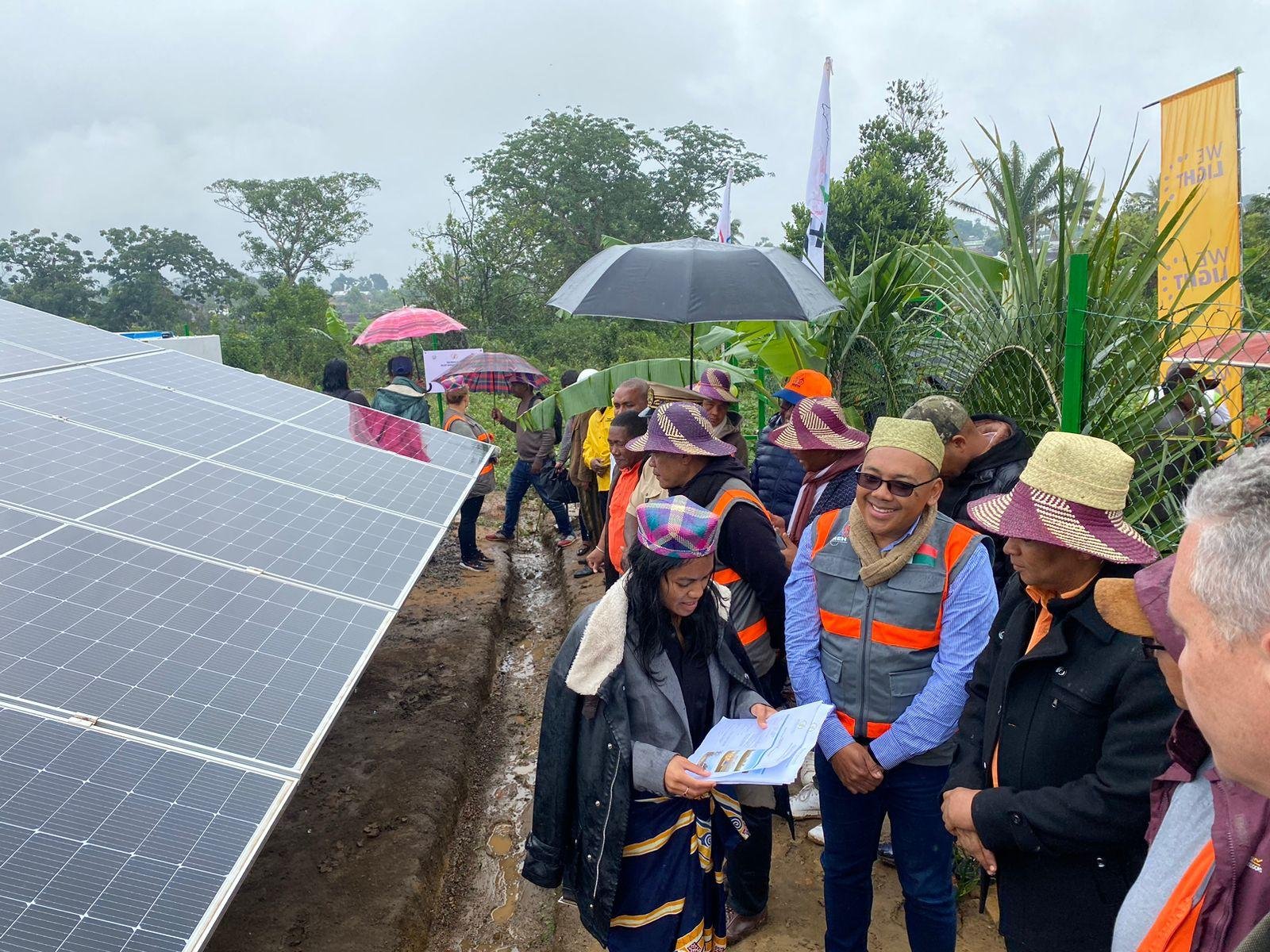
WeLight’s expansion aims to address this gap by deploying additional solar powered mini grids capable of generating and distributing electricity locally.
Unlike conventional power infrastructure, mini-grids can be installed more quickly and economically, providing homes, schools, hospitals, farms, and businesses with stable electricity while reducing dependence on diesel generators.
Announced on July 6, 2026
On July 6, 2026, WeLight confirmed its US$650 million expansion programme, outlining plans to rapidly increase its presence across multiple African markets.
The company expects the investment to support a tenfold increase in customers, making it one of the most ambitious renewable energy expansion projects currently underway on the continent.
Nigeria and the Democratic Republic of the Congo are expected to become key markets because of their large populations and significant electricity access gaps, while Madagascar, Mali, and other countries will also benefit from the rollout.
The expansion forms part of WeLight’s broader strategy to accelerate universal energy access through decentralized clean energy systems.
Why Solar Mini-Grids Matter
Solar mini grids are becoming an increasingly important component of Africa’s energy transition.
Many rural communities rely on costly diesel generators or have no access to electricity at all, limiting business productivity and slowing economic development.
Reliable electricity enables entrepreneurs to:
- Extend business operating hours.
- Power manufacturing equipment.
- Preserve agricultural products through refrigeration.
- Improve internet connectivity.
- Expand digital financial services.
- Support healthcare facilities.
- Improve educational outcomes.
As renewable energy technologies continue becoming more affordable, mini grids are helping unlock new economic opportunities for businesses operating beyond major cities.
Supporting Entrepreneurship and Economic Growth
Reliable electricity plays a critical role in supporting entrepreneurship.
Small businesses often spend a significant portion of their operating budgets on fuel for generators due to unreliable electricity supplies.
By providing affordable renewable energy, mini-grids can reduce operating costs while improving productivity and competitiveness.
Improved electricity access also creates opportunities for startups working in agriculture, healthcare, manufacturing, fintech, education, logistics, and digital services.
For many rural entrepreneurs, access to dependable power is often the difference between maintaining a subsistence business and building a scalable enterprise.
Africa’s Renewable Energy Momentum
WeLight’s announcement comes amid growing investment in Africa’s renewable energy industry.
Governments, development finance institutions, climate funds, and private investors are increasingly supporting projects that expand electricity access while reducing carbon emissions.
Solar energy has become one of the continent’s fastest growing power sources because of declining technology costs and abundant sunlight across much of Africa.
As climate focused investment continues increasing, decentralized energy systems are expected to play an increasingly important role in achieving universal electricity access.
Opportunities Beyond Energy
The benefits of expanded electricity access extend well beyond the power sector.
Communities connected to reliable electricity often experience improvements in:
- Local business development.
- Agricultural productivity.
- Healthcare delivery.
- Digital inclusion.
- Education.
- Financial services.
- Employment opportunities.
For investors, expanding rural electrification also creates opportunities in electric mobility, telecommunications, cold chain logistics, digital payments, and e commerce.
These ripple effects make renewable energy one of the strongest enablers of inclusive economic growth across Africa.
Looking Ahead
WeLight’s US$650 million investment, announced on July 6, 2026, represents one of the largest clean energy commitments currently underway in Africa’s off grid electricity market.
As implementation progresses over the coming years, the company expects to dramatically expand access to reliable electricity while helping accelerate economic development across several African countries.
The project also reinforces the growing role of private-sector investment in addressing one of the continent’s most pressing infrastructure challenges.
EIA Takeaway
WeLight’s expansion demonstrates that energy infrastructure is fundamental to Africa’s economic transformation. Reliable electricity is more than a utility, it enables businesses to operate efficiently, supports innovation, improves productivity, and creates opportunities for entrepreneurship. As investment in decentralized renewable energy continues to grow, companies that help close Africa’s electricity gap will play an increasingly important role in driving sustainable development and long-term economic growth.