
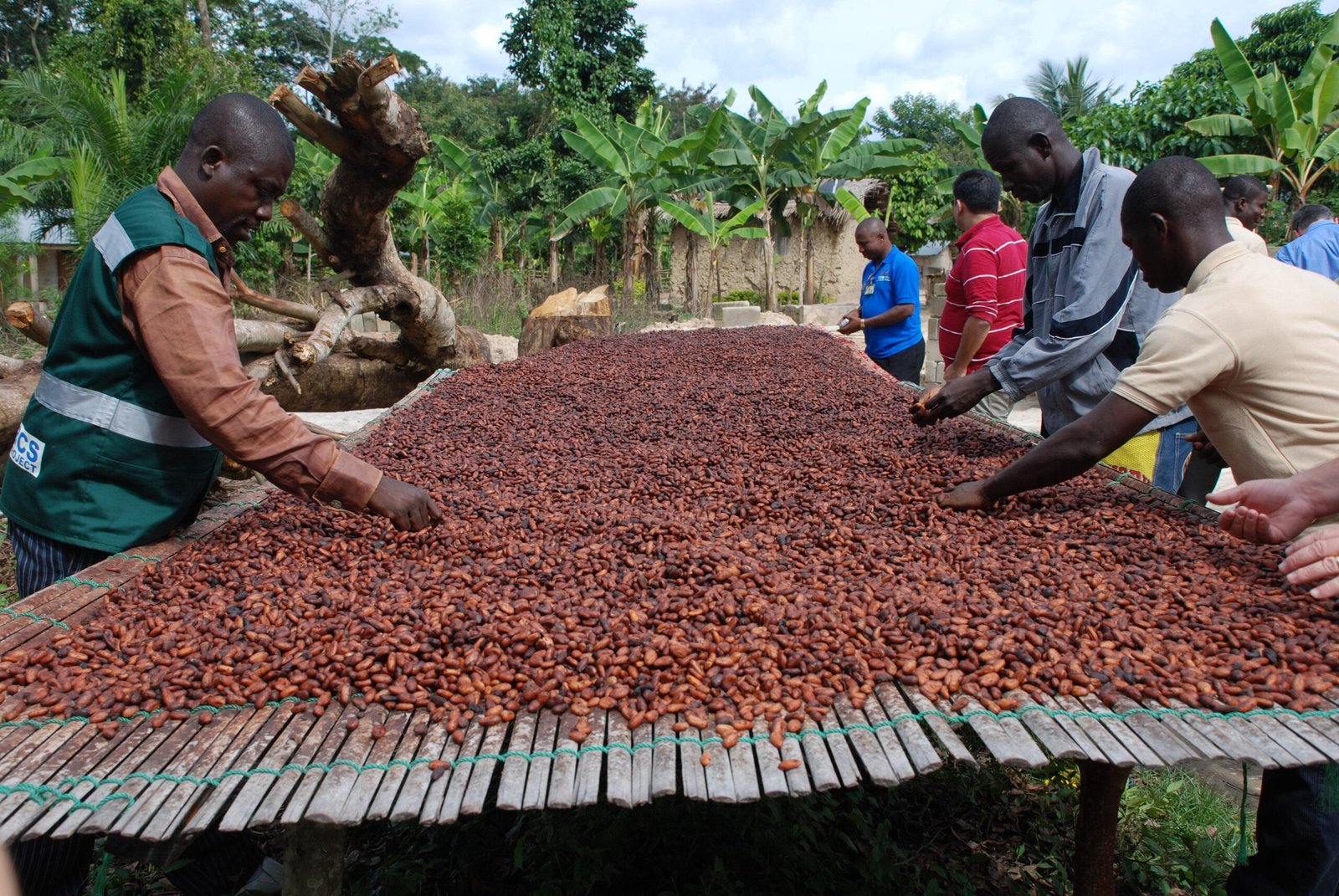
Nigeria Bans Raw Cocoa Bean Exports to Boost Local Processing
Nigeria has announced a ban on the export of raw cocoa beans, a major policy shift aimed at encouraging domestic processing, expanding value added manufacturing, and increasing the country’s earnings from one of its most important agricultural exports.
The decision is designed to reduce Nigeria’s dependence on exporting unprocessed cocoa while promoting local industries that produce cocoa butter, cocoa liquor, cocoa powder, chocolate, and other finished products.
As the world’s fourth largest cocoa producer, Nigeria is seeking to capture a greater share of the global cocoa value chain by processing more of its cocoa domestically before it reaches international markets.
Moving Beyond Raw Commodity Exports
For decades, Nigeria has exported large volumes of raw cocoa beans while much of the processing and manufacturing has taken place overseas.
This has meant that higher value products, including chocolate, confectionery, cosmetics, and cocoa based ingredients, have generated greater economic benefits in importing countries rather than in Nigeria.
By restricting raw cocoa exports, the government hopes to encourage investment in local processing facilities, create manufacturing jobs, and increase export revenues from finished and semi processed cocoa products.
The move reflects a broader strategy to industrialise Nigeria’s agricultural sector by promoting value addition rather than relying primarily on commodity exports.
Strengthening Nigeria’s Cocoa Industry
Nigeria is one of the world’s leading cocoa producers, alongside Côte d’Ivoire, Ghana, and Indonesia.
The crop provides income for hundreds of thousands of farmers and contributes significantly to the country’s non oil exports.
However, industry experts have long argued that Nigeria captures only a small portion of the value generated from the global cocoa market because most beans leave the country before processing.
Expanding domestic processing could help strengthen local supply chains while encouraging investment in food manufacturing, packaging, logistics, and export oriented businesses.
It may also create opportunities for Nigerian companies to compete more effectively in international markets for higher value cocoa products.
Supporting Industrialisation and Job Creation
The export restriction is expected to encourage investors to establish or expand cocoa processing facilities across Nigeria.
Processing cocoa domestically requires factories, equipment, skilled workers, packaging operations, transportation networks, and quality assurance systems.
These activities generate significantly more employment than exporting raw agricultural commodities.
The policy also aligns with Nigeria’s broader industrialisation agenda, which seeks to increase local manufacturing, reduce dependence on imported finished goods, and diversify the economy beyond crude oil exports.
If successful, the initiative could stimulate investment across the agricultural and food manufacturing sectors.
Challenges Ahead
While the policy presents significant opportunities, implementation will be critical.
Expanding domestic processing capacity will require substantial investment in infrastructure, electricity, transportation, financing, and modern processing technology.
Manufacturers will also need access to competitive financing and reliable supply chains to scale production efficiently.
Industry stakeholders have emphasized that supportive policies, incentives, and partnerships with private investors will be essential to ensure that local processors can absorb larger volumes of cocoa production without disrupting farmers’ incomes.
The success of the initiative will depend not only on restricting exports but also on creating an environment where domestic processing businesses can thrive.
A Growing Focus on Value Addition
Across Africa, governments are increasingly pursuing policies that encourage local value addition instead of exporting raw commodities.
Countries rich in agricultural and mineral resources are seeking to process more products domestically to create employment, expand industrial capacity, and retain a greater share of export earnings.
Nigeria’s cocoa strategy reflects this wider continental trend, positioning manufacturing and agro processing as key drivers of long-term economic growth.
As global demand for premium chocolate and cocoa-based products continues to rise, domestic processing could allow Nigerian businesses to access more profitable segments of the international market.
Looking Ahead
The government’s next challenge will be supporting investments that expand processing capacity while ensuring cocoa farmers continue to benefit from strong market demand.
If implemented successfully, the policy could accelerate the growth of Nigeria’s cocoa processing industry, attract new manufacturing investments, and strengthen the country’s position in the global cocoa value chain.
Industry observers will also watch how international buyers, exporters, and local processors adapt to the new policy in the months ahead.
EIA Takeaway
Nigeria’s decision to ban raw cocoa bean exports reflects a broader shift toward building more value within Africa rather than exporting raw materials. Processing cocoa domestically has the potential to create jobs, increase export earnings, strengthen manufacturing, and develop globally competitive Nigerian brands. For entrepreneurs, the policy highlights a growing opportunity in agro processing, food manufacturing, packaging, logistics, and export-oriented businesses that add value before products leave the continent.