
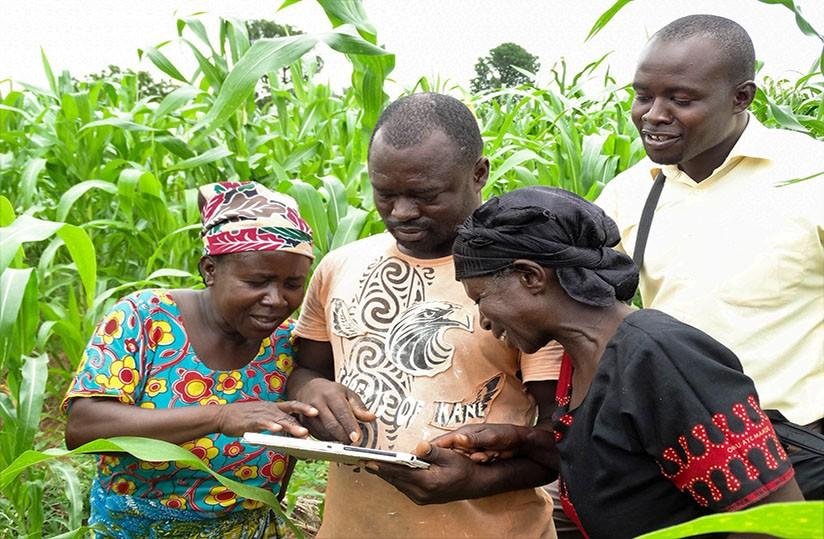
Data and Technology Could Unlock Africa’s US$117 Billion Agricultural Finance Gap
Africa’s agricultural sector feeds millions of people, employs more than half of the continent’s workforce, and contributes significantly to national economies. Yet despite its importance, agriculture continues to receive only a small fraction of formal financial support.
A new industry analysis suggests that data, digital technologies, and financial innovation could play a transformative role in closing Africa’s estimated US$117 billion agricultural financing gap, enabling millions of farmers and agribusinesses to access the capital needed to increase productivity, strengthen food security, and build more resilient agricultural value chains.
The findings highlight one of the continent’s biggest economic paradoxes: although agriculture remains Africa’s largest employer, the sector receives only about 1% of commercial bank lending, leaving countless farmers and agricultural businesses underserved by traditional financial institutions.
A Financing Gap Holding Back Growth
Access to affordable financing has long been one of the biggest barriers facing African agriculture.
Smallholder farmers, cooperatives, and agribusinesses often struggle to secure loans because lenders perceive agriculture as a high risk sector influenced by unpredictable weather, fluctuating commodity prices, and limited financial records.
Without sufficient access to capital, farmers face difficulties purchasing improved seeds, fertilizers, irrigation systems, machinery, storage facilities, and modern technologies that could increase productivity.
The result is a cycle in which low investment contributes to lower yields, reducing incomes and limiting opportunities for further growth.
Closing Africa’s agricultural financing gap could significantly improve food production while creating new economic opportunities across rural communities.
Data Is Changing How Agricultural Risk Is Measured
Historically, financial institutions have lacked sufficient information to accurately evaluate agricultural borrowers.
Many smallholder farmers operate informally, have limited credit histories, and produce little documentation that banks traditionally require when assessing loan applications.
However, advances in digital technology are beginning to change this landscape.
Satellite imagery, mobile payment records, weather data, crop monitoring systems, farm management software, and digital transaction histories now provide lenders with alternative sources of information that help evaluate agricultural risk more accurately.
Rather than relying solely on conventional credit scores, financial institutions can increasingly assess productivity, farm performance, and repayment potential using real-time data.
This reduces uncertainty while expanding lending opportunities for previously excluded farmers.
Financial Technology Opens New Possibilities
Financial technology companies are also helping reshape agricultural finance across Africa.
Digital lending platforms, mobile banking applications, embedded finance solutions, and AI powered credit assessment tools are making agricultural loans faster, more accessible, and more affordable.
Many fintech companies now integrate alternative data into their lending models, enabling farmers without formal banking histories to demonstrate financial reliability.
Digital wallets and mobile money platforms also simplify loan disbursement, repayment collection, and financial management, reducing operational costs for both lenders and borrowers.
As financial services become increasingly digital, agriculture stands to benefit from broader financial inclusion.
Technology Supporting Smarter Farming
The growing use of technology extends beyond financing itself.
Precision agriculture, Internet of Things (IoT) sensors, drone mapping, artificial intelligence, and predictive analytics are helping farmers improve productivity while generating valuable operational data.
This information not only supports better farming decisions but also strengthens confidence among financial institutions by providing measurable indicators of farm performance.
For lenders, access to reliable production data reduces uncertainty and supports more informed lending decisions.
For farmers, technology creates opportunities to access larger loans, better insurance products, and additional financial services.
Collaboration Across the Agricultural Ecosystem
Closing Africa’s agricultural financing gap will require collaboration across multiple sectors.
Governments, commercial banks, fintech companies, development finance institutions, insurance providers, agritech startups, and mobile network operators all have roles to play in building more inclusive financial ecosystems.
Public private partnerships can help develop digital infrastructure, improve rural connectivity, strengthen agricultural databases, and encourage greater investment in technology enabled financial services.
Meanwhile, supportive regulatory frameworks can create an environment that encourages innovation while protecting farmers and financial institutions alike.
Agriculture Remains Central to Africa’s Economy
Agriculture continues to be one of Africa’s most important economic sectors, employing more than half of the continent’s workforce and supporting the livelihoods of hundreds of millions of people.
As Africa’s population continues to grow, improving agricultural productivity will become increasingly important for food security, export competitiveness, rural development, and economic resilience.
Greater access to financing could enable farmers to adopt modern technologies, increase production, improve climate resilience, and participate more effectively in regional and international markets.
Technology therefore represents not only a financial opportunity but also a strategic investment in Africa’s long term economic development.
Looking Ahead
Industry experts believe that digital transformation could fundamentally reshape agricultural finance over the coming decade.
As data becomes more accessible and financial technologies continue evolving, lenders may increasingly view agriculture as an investable sector rather than a high risk industry.
Continued investment in digital infrastructure, AI powered financial services, satellite technologies, and agritech innovation will be essential to narrowing the financing gap.
If these efforts succeed, millions of African farmers could gain access to the capital needed to modernize operations, increase productivity, and strengthen the continent’s food systems.
EIA Takeaway
Africa’s agricultural financing challenge is not simply about the lack of capital, it is increasingly about the lack of reliable information. Data, artificial intelligence, digital payments, and financial technology are creating new ways for lenders to understand agricultural risk and serve farmers who have historically been excluded from formal finance. As agritech and fintech continue to converge, closing the continent’s US$117 billion financing gap could become one of Africa’s most significant economic opportunities, benefiting farmers, investors, financial institutions, and consumers alike.