
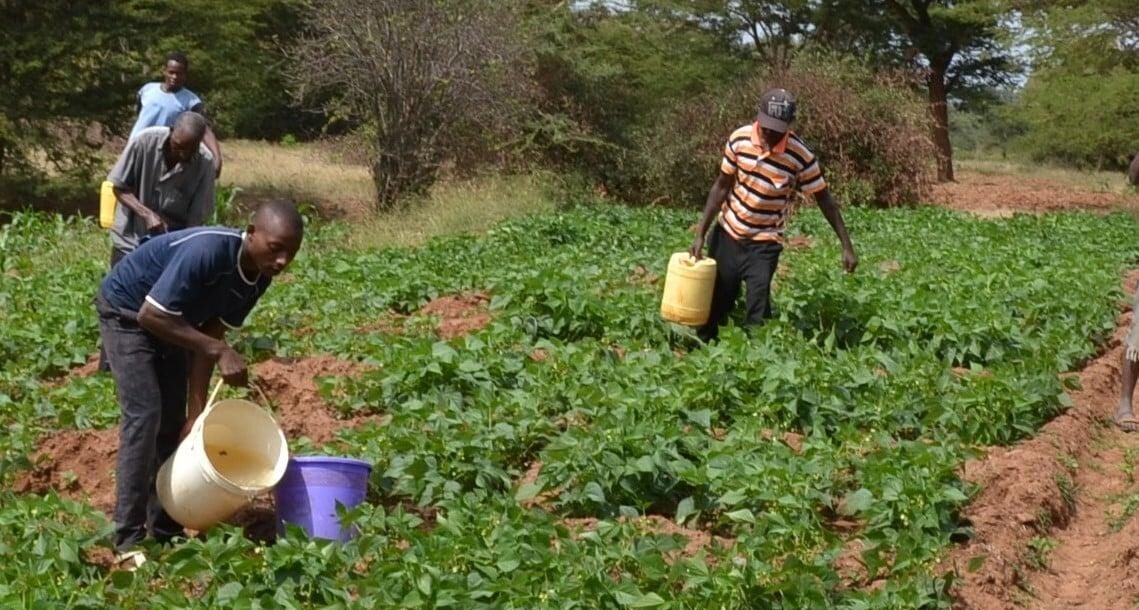
African Development Bank Approves US$94 Million to Expand Irrigation in Cameroon
The African Development Bank (AfDB) has approved US$94 million in financing to expand irrigation infrastructure in northern Cameroon, a major investment aimed at strengthening agricultural productivity, improving food security, and supporting long term rural economic development.
The project is expected to modernize irrigation systems across key farming regions, enabling farmers to increase crop production, reduce dependence on unpredictable rainfall, and improve resilience to climate change. Beyond its direct impact on agriculture, the investment is also expected to create new opportunities for agritech companies, equipment suppliers, and businesses providing digital farming solutions.
The approval underscores the African Development Bank’s continued commitment to supporting sustainable agricultural development across the continent while accelerating economic growth through strategic infrastructure investments.
Modern Irrigation to Boost Agricultural Production
Agriculture remains one of Cameroon’s largest economic sectors, employing a significant share of the country’s workforce and contributing substantially to national GDP. However, productivity in many farming communities continues to be constrained by limited irrigation infrastructure and increasing climate variability.
Northern Cameroon has experienced recurring droughts and irregular rainfall in recent years, making reliable water management increasingly important for farmers.
The new AfDB-funded project aims to expand irrigated farmland, rehabilitate existing irrigation systems, and improve water distribution networks to ensure more efficient agricultural production throughout the year.
Access to reliable irrigation allows farmers to cultivate multiple growing seasons, increase crop yields, diversify production, and reduce losses associated with prolonged dry periods.
Strengthening Food Security
The investment comes at a time when many African countries are prioritizing food security and agricultural resilience.
Improved irrigation infrastructure enables farmers to produce crops more consistently despite changing weather patterns, helping stabilize food supplies and reduce dependence on imports.
Higher agricultural productivity can also improve household incomes while supporting national efforts to strengthen domestic food production.
For Cameroon, expanding irrigation represents a strategic investment in both rural development and long term economic stability.
New Opportunities for Agritech Companies
The irrigation expansion is expected to create significant opportunities for agritech businesses operating across Africa.
As farming becomes more technology-driven, demand is increasing for solutions including smart irrigation systems, remote sensing technologies, precision agriculture platforms, satellite monitoring, farm management software, water efficiency tools, and digital advisory services.
Companies developing agricultural drones, Internet of Things (IoT) sensors, weather forecasting technologies, and digital marketplaces may also benefit from increased investment in modern farming infrastructure.
The project illustrates how public infrastructure spending can stimulate private-sector innovation by creating demand for advanced agricultural technologies and services.
Supporting Rural Economic Growth
Beyond improving agricultural output, the irrigation programme is expected to generate employment opportunities during both construction and long-term operation.
Infrastructure projects of this scale typically create jobs in engineering, construction, equipment maintenance, logistics, agricultural services, and local supply chains.
Higher farm productivity can also encourage investment in food processing, storage facilities, transportation, and export-oriented agribusinesses.
As agricultural value chains expand, small and medium sized enterprises are expected to benefit from increased commercial activity across rural communities.
Climate Resilience Remains a Priority
Climate change continues to pose significant challenges for African agriculture, with rising temperatures, prolonged droughts, and unpredictable rainfall affecting crop production across many regions.
Modern irrigation systems play an important role in climate adaptation by improving water efficiency and reducing farmers’ exposure to weather-related risks.
The African Development Bank has consistently prioritized investments that strengthen climate resilience while supporting sustainable economic development.
Projects combining infrastructure development with climate smart agriculture are becoming increasingly important as governments seek to build more resilient food systems.
The African Development Bank’s Growing Investment in Agriculture
The approval of the Cameroon irrigation project reflects the African Development Bank’s broader strategy of supporting agricultural transformation across Africa.
In recent years, the Bank has financed projects focused on irrigation, rural roads, agricultural value chains, food processing, climate adaptation, and rural infrastructure in multiple countries.
These investments aim to improve agricultural productivity while creating employment opportunities, encouraging private-sector participation, and strengthening regional food security.
As African governments continue modernizing their agricultural sectors, development finance institutions remain important partners in financing large scale infrastructure that would otherwise be difficult to fund.
Looking Ahead
Construction and implementation of the irrigation project are expected to begin following final project preparations, with the investment anticipated to improve farming productivity across northern Cameroon over the coming years.
As irrigation infrastructure expands, agritech companies, agricultural equipment providers, and digital farming startups may find new opportunities to deliver innovative solutions that improve efficiency and sustainability.
The project also reinforces the growing role of infrastructure investment in supporting Africa’s agricultural transformation and long-term economic development.
EIA Takeaway
The African Development Bank’s US$94 million investment demonstrates that modern agriculture depends as much on infrastructure as it does on innovation. Expanding irrigation systems not only improves food production but also creates fertile ground for agritech startups, digital agriculture platforms, and private-sector investment. For entrepreneurs across Africa, large scale public infrastructure projects often generate new business opportunities, proving that development finance can serve as a catalyst for innovation, employment, and sustainable economic growth.